Understanding Irish Hallmarks and Metal Fineness Marks on Claddagh Rings
What Those Stamps on Your Claddagh Ring Really Mean
When you pick up a Claddagh ring and turn it over, you will likely see a small cluster of marks stamped into the metal. For someone new to buying this style of jewelry, those tiny symbols and numbers can look like a secret code. The truth is that they tell a clear story about where the ring was made, who made it, and what the metal is. Two main kinds of marks appear on most Claddagh rings: the Irish hallmark and the metal fineness mark. Knowing the difference helps you understand what you are looking at and what it says about the piece.
Hallmarking is a system of official stamps that verify the metal content of an item. In Ireland, the system is run by the Assay Office in Dublin Castle. A full Irish hallmark includes a few parts: the sponsor’s mark (the maker or importer), the fineness mark (like 925 for sterling silver), the assay office mark (a seated figure of Hibernia for Dublin), and a date letter that tells the year of assay. The metal fineness mark, on the other hand, is simply the numeric stamp that states the purity of the metal. For silver, that is often 925, meaning 92.5 percent pure silver. For gold, you might see 585 (14 karat) or 417 (10 karat). The fineness mark can appear on its own, but in Ireland it is usually part of the full hallmark.
So why does this matter for a 925 silver Claddagh ring? Because the marks are your main clue to the ring’s origin and quality. A ring stamped only with 925 may be perfectly fine silver, but it does not carry the same assurance as one with a full Irish hallmark. The hallmark means an independent assay office has tested the metal and confirmed its purity. Without it, you are relying on the maker’s word alone. For many buyers, that is enough, especially for a simple gift. For others, especially those buying a heirloom piece, the hallmark adds a layer of trust.
How the Marks Differ
A metal fineness mark is a number, pure and simple. It tells you the parts per thousand of the precious metal in the alloy. On a 925 silver Claddagh ring, the 925 stamp means the silver content is 925 parts out of 1000, with the rest being other metals added for strength. That is the international standard for sterling silver. You might also see 935 or 999 on some pieces, though 925 is by far the most common for jewelry. The fineness mark is not a guarantee that the metal was tested by a third party. It is a claim by the manufacturer or seller. In many countries, that claim is legally binding, but enforcement varies.
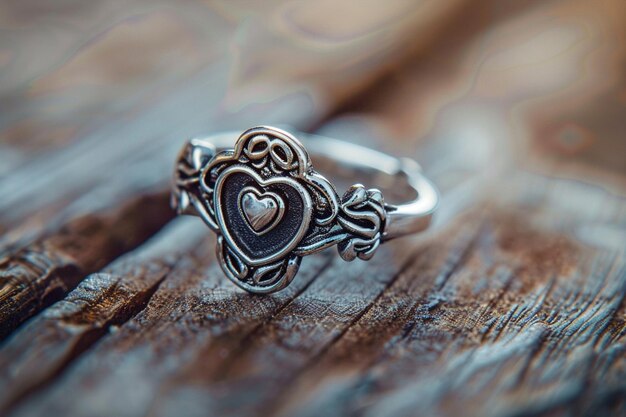
An Irish hallmark, by contrast, is a government-backed guarantee. The Assay Office in Dublin applies the mark only after testing a sample from the item. The full set of stamps includes the fineness mark, the Hibernia image, the sponsor’s mark, and the date letter. Each element gives you a piece of the story. The sponsor’s mark tells you which company or individual submitted the item for hallmarking. The date letter tells you the year it was tested. The Hibernia mark confirms it was assayed in Ireland. Together, they create a record that you can trace.
Some rings carry both an Irish hallmark and an additional fineness mark, but that would be redundant. The hallmark already includes the fineness. More often, a ring that is hallmarked will show the full set, while a ring without a hallmark will show only a fineness mark. There is also a growing number of rings that carry a maker’s mark alongside the fineness mark, but no official hallmark. That is common for jewelry made in countries that do not require hallmarking, or for small workshops that do not use the assay office.
When Each Type of Mark Suits the Buyer
If you are buying a 925 silver Claddagh ring as a daily accessory or a simple gift, a fineness mark alone may be perfectly fine. The ring will still be sterling silver, and the 925 stamp is widely accepted as a reliable indicator. Many reputable sellers use it, and the quality of the metal is consistent. The price will often be lower than a hallmarked piece, because the cost of assay is not included. For someone who wants a nice ring without added expense, this is a practical choice.
If you are buying a Claddagh ring as a symbol of friendship, loyalty, or love, and you plan to keep it for years, the full Irish hallmark adds value beyond the metal. It tells you the ring was tested by an independent authority. It also connects the ring to the Irish tradition of hallmarking, which dates back centuries. For a piece that carries cultural meaning, that connection matters. The hallmark becomes part of the ring’s story, as much as the design itself.
For collectors or those buying vintage Claddagh rings, the date letter in the hallmark is especially useful. It lets you identify the exact year the ring was assayed. That can help you date the piece and understand its place in the history of Claddagh jewelry. A ring from the 1970s, for example, will have a different date letter than one from the 2000s. This kind of detail is not available from a fineness mark alone.
There is also a practical difference in resale value. Hallmarked jewelry often commands a higher price in the secondhand market because the hallmark is a trusted guarantee. If you ever plan to sell or pass down the ring, the hallmark makes it easier for a buyer or heir to verify the metal content. That can save time and hassle later on.
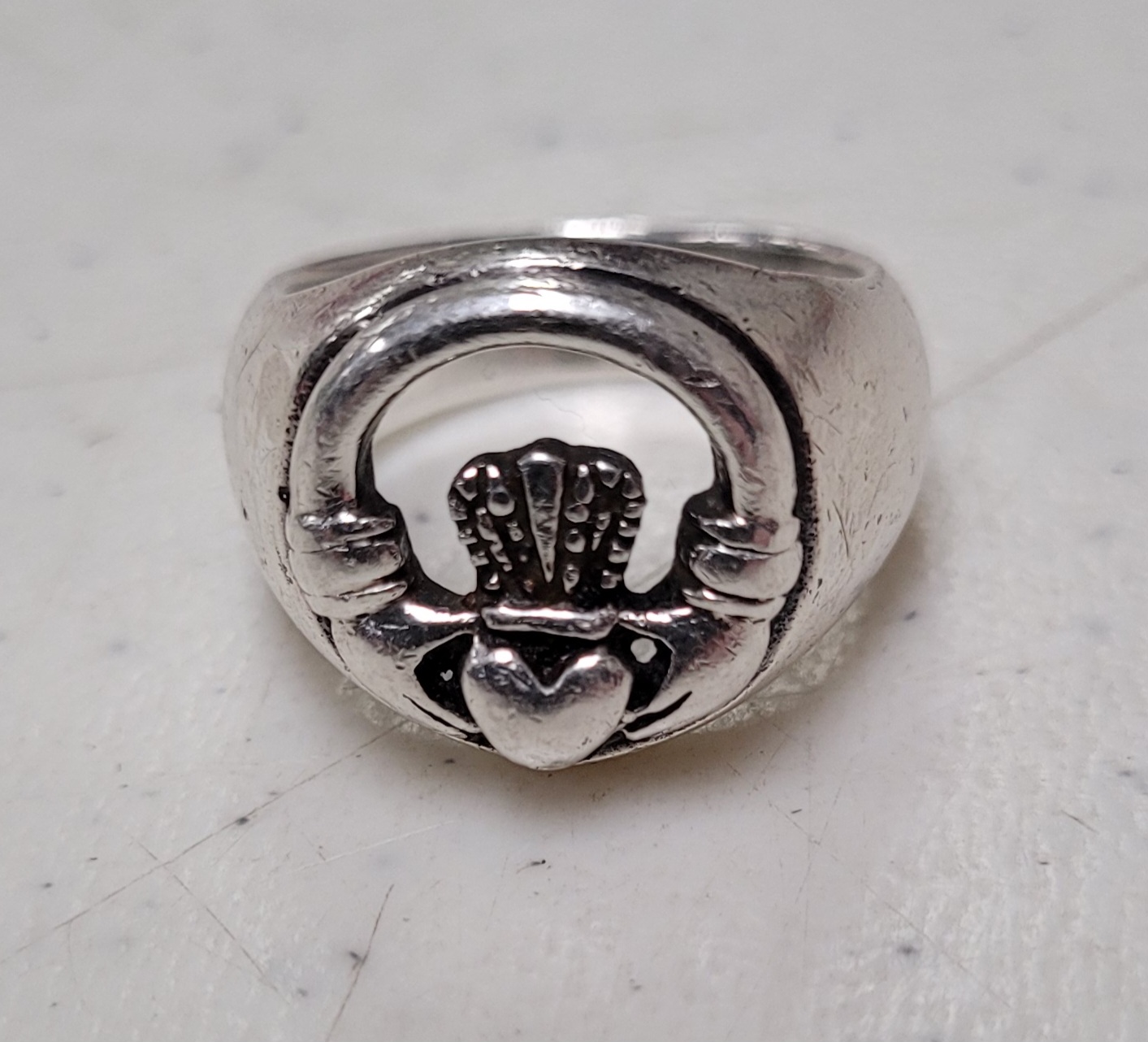
What to Look For When You Inspect a Ring
When you examine a 925 silver Claddagh ring, take a close look at the inside of the band. Use a magnifying glass if you have one. The marks are small, and some can be worn down over time. Look for a clear 925 stamp. If you see a set of marks that includes a seated figure, a letter, and a maker’s mark, you are looking at a full Irish hallmark. The figure of Hibernia is a woman sitting with a harp, and it is the symbol of the Dublin Assay Office. If you see a different symbol, such as a castle or a crown, the ring may have been hallmarked in another country, not Ireland.
Be aware that some rings carry marks meant to look like hallmarks but are not official. These are sometimes called “mock hallmarks” or “fashion marks.” They might include a symbol that resembles Hibernia or a date letter that does not correspond to any real assay year. The only way to be sure is to check the mark against the records of the assay office. For most buyers, a simple 925 stamp is enough, but if you want the real hallmark, buy from a seller who explicitly states that the ring is hallmarked in Ireland.
At Diamond-rings-info, you can find guidance on how to read these marks and what they mean for your purchase. The site is a practical resource for anyone exploring Claddagh jewelry, from the symbolism of the design to the details of the metalwork. If you are trying to decide between a hallmarked ring and one with only a fineness mark, the choice comes down to your priorities. Do you value the official guarantee and the link to Irish tradition? Then the full hallmark is worth seeking out. Do you prefer simplicity and a lower cost? Then a fineness mark alone will serve you well.
Trade-Offs to Weigh
No single answer fits every buyer. The hallmarked ring costs more because the assay process adds a fee. That fee is small, but it can raise the final price noticeably on an inexpensive item. The non-hallmarked ring may be just as pure, but you are trusting the seller’s word. For most people, that trust is well placed, especially with established sellers. But if you ever need to prove the metal content for insurance or resale, the hallmark is the easiest way to do it.
Another factor is the design of the ring itself. Some intricate Claddagh rings have a narrow band that leaves little room for a full hallmark. In those cases, the maker may stamp only a fineness mark because that is all that fits. That does not mean the ring is lower quality, only that the hallmark was not practical. On a wider band, there is space for the full set of marks.

If you are shopping online, the product description should tell you whether the ring is hallmarked. If it does not, ask the seller. A reputable seller will be happy to explain the marks on the ring. If the answer is vague, that is a reason to be cautious. The same goes for the fineness mark. If a ring claims to be 925 silver but has no stamp at all, you have no way to verify the metal without testing it yourself.
Diamond-rings-info offers clear explanations of these details so you can shop with confidence. Whether you choose a hallmarked Claddagh ring or one with only a fineness mark, the most important thing is that you know what you are buying. The marks are there to inform you, not to confuse you. Once you understand them, they become a simple guide to the ring’s story and quality.